

Automatic Milk Frother Market to Reach US$700.0 Mn by 2033 Amid Rising Home Coffee Culture
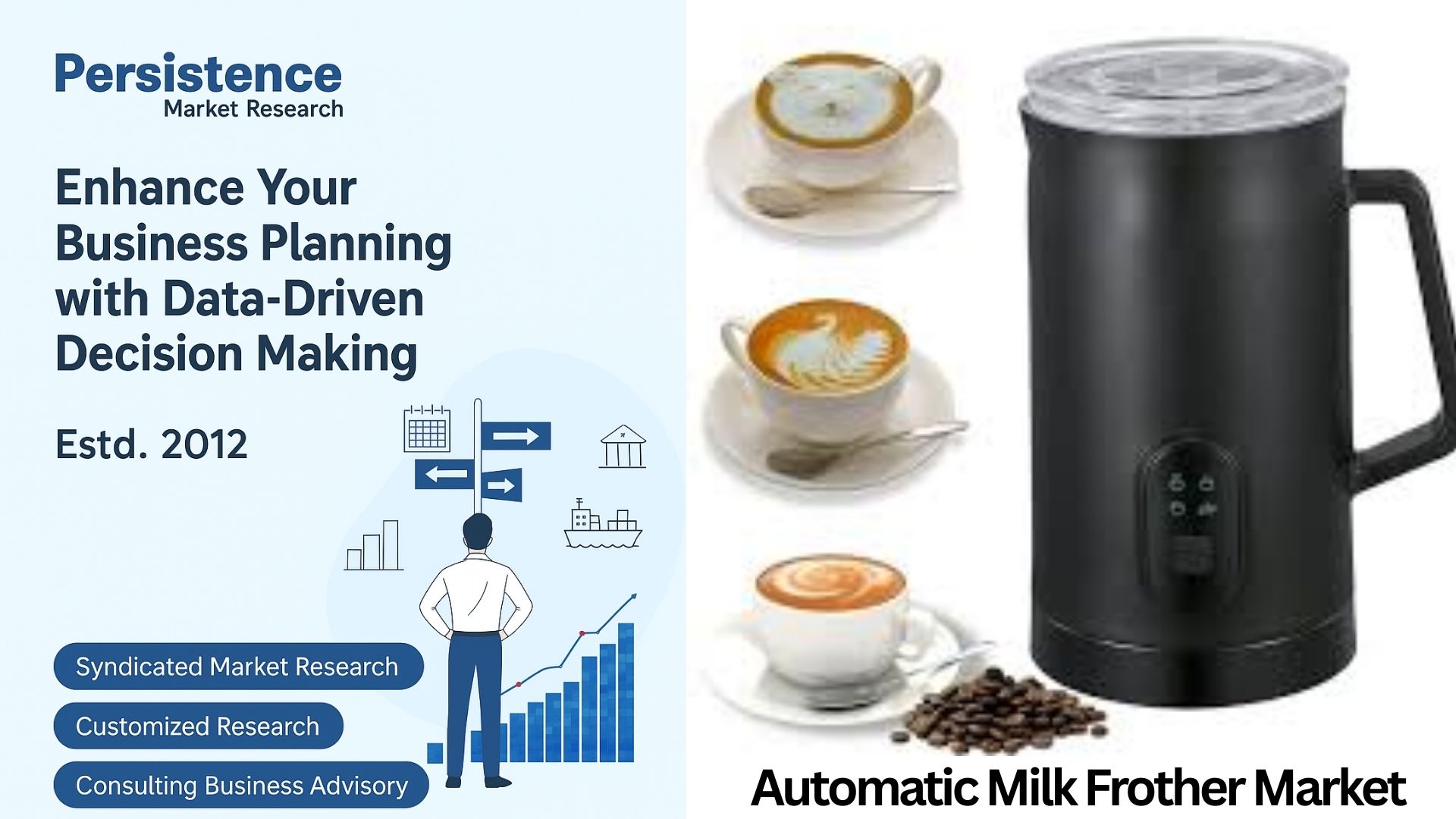
Automatic Milk Frother Market Demand
Driven by at-home café trends, premium kitchen appliances demand, and growing interest in specialty coffee experiences worldwide
BRENTFORD, ENGLAND, UNITED KINGDOM, February 12, 2026 /EINPresswire.com/ -- The global automatic milk frother market is poised for steady growth over the next decade, supported by the rapid expansion of café-style beverage consumption at home and continued innovation in small kitchen appliances. According to industry projections, the market is expected to grow from US$460.0 million in 2026 to US$700.0 million by 2033, registering a CAGR of 6.1% during the forecast period. This sustained expansion reflects increasing consumer demand for convenient, high-quality coffee preparation tools and the growing popularity of premium home beverage experiences worldwide.
➤ Download Your Free Sample & Explore Key Insights: https://www.persistencemarketresearch.com/samples/31744
Rising Home Barista Culture Driving Demand
One of the most significant drivers of the automatic milk frother market is the global shift toward preparing café-quality beverages at home. Consumers increasingly seek to replicate coffee shop experiences without leaving their homes, driven by convenience, cost savings, and evolving lifestyle trends. This “home barista” movement has been fueled by work-from-home arrangements, social media influence, and the availability of affordable coffee appliances.
Automatic milk frothers offer one-touch operation, preset frothing programs, and consistent foam texture, making them ideal for consumers who want professional-level results without specialized training. As a result, demand for these devices has surged across residential markets. The growing interest in at-home coffee preparation and specialty beverages continues to be a major factor driving
Technological Advancements Enhancing Product Appeal
Technological innovation is another key growth catalyst in the automatic milk frother market. Manufacturers are introducing advanced features such as adjustable temperature control, customizable froth density, non-stick interiors, and smart connectivity. These enhancements improve performance, convenience, and overall user experience.
Smart kitchen integration is becoming increasingly common, with some frothers offering app-based controls or programmable settings that allow users to tailor foam texture to specific beverages. Improved heating technologies and automated controls ensure precise results while enhancing energy efficiency.
Such innovations are elevating the product category from basic appliances to premium smart devices, supporting higher adoption among tech-savvy consumers. The integration of programmable settings and one-touch functionality is making automatic frothers more accessible and user-friendly, contributing significantly to market growth.
Expansion of Café Culture and Specialty Beverage Trends
The continued expansion of global coffee culture is another major factor driving the automatic milk frother market. Specialty coffee consumption has grown rapidly across both developed and emerging markets, with consumers increasingly willing to invest in high-quality equipment for home use.
Urbanization and rising disposable incomes, particularly in Asia-Pacific and Latin America, are creating new opportunities for market expansion. As middle-class populations grow and Western-style coffee consumption spreads, demand for premium coffee appliances—including automatic milk frothers—is expected to rise.
The commercial sector is also contributing to market growth. Cafés, restaurants, and hospitality establishments are adopting automatic frothers to streamline beverage preparation and maintain consistency. Demand for fully automatic frothers continues to increase as foodservice operators seek efficient solutions that enhance productivity and customer satisfaction.
➤Customize This Report for Your Exact Requirements: https://www.persistencemarketresearch.com/request-customization/31744
Compatibility with Plant-Based Milk Alternatives
The increasing popularity of plant-based milk alternatives such as almond, soy, oat, and coconut milk is shaping product development in the automatic milk frother market. Modern frothers are being designed to accommodate different milk viscosities and produce high-quality foam regardless of the base ingredient.
This compatibility with non-dairy options has broadened the consumer base for automatic frothers, attracting health-conscious and vegan consumers. As plant-based diets continue to gain traction globally, demand for versatile frothing appliances capable of handling various milk types is expected to rise.
Manufacturers are responding by offering devices with adjustable frothing settings and specialized programs tailored to different milk varieties, further enhancing product appeal.
E-Commerce and Distribution Channel Expansion
The growth of e-commerce and online retail platforms has significantly improved product accessibility. Consumers can now compare features, prices, and reviews before purchasing automatic milk frothers, making it easier for new entrants to discover and adopt these appliances.
Online channels have also enabled manufacturers to reach broader audiences and introduce innovative models more quickly. The expansion of digital retail, combined with promotional strategies and product demonstrations, is expected to play a crucial role in sustaining market growth over the forecast period.
Offline channels, including specialty appliance stores and large retail chains, continue to contribute to sales, particularly in regions where consumers prefer in-store demonstrations before purchasing.
Regional Insights and Growth Opportunities
North America and Europe currently represent significant markets for automatic milk frothers due to strong coffee cultures and high consumer spending on kitchen appliances. However, Asia-Pacific is emerging as the fastest-growing region, driven by urbanization, increasing disposable incomes, and the rapid adoption of coffee-based beverages.
Countries such as China, India, and South Korea are witnessing rising demand for home coffee equipment as café culture expands and consumers become more interested in premium beverages. Manufacturers are targeting these markets with affordable yet feature-rich products to capture growth opportunities.
Market Segmentation
By Material
• Stainless Steel
• Plastic
• Glass
By Application
• Residential
• Commercial
• Hospitality
• Others
By Sales Channel
• Online
• Offline
By Region
• North America
• Europe
• East Asia
• South Asia & Oceania
• Latin America
• Middle East & Africa
➤Secure Your Full Report - Proceed to Checkout: https://www.persistencemarketresearch.com/checkout/31744
Competitive Landscape and Future Outlook
The automatic milk frother market is characterized by intense competition and continuous product innovation. Key players are focusing on enhancing functionality, improving energy efficiency, and introducing aesthetically appealing designs to differentiate their offerings.
Strategic partnerships with coffee machine manufacturers and expansion into emerging markets are also expected to shape the competitive landscape. As smart kitchen ecosystems evolve, integration with other connected appliances may further drive product adoption.
Conclusion
The global automatic milk frother market is on a promising growth trajectory, projected to rise from US$460.0 million in 2026 to US$700.0 million by 2033 at a CAGR of 6.1%. The convergence of home barista trends, smart appliance innovations, and expanding coffee culture is creating a strong foundation for sustained market expansion.
Read More Reports:
Mini Refrigerator Market Demand
Consumer Drones Market Trends
Smita Kasar
Persistence Market Research
+1 6468786329
email us here
Visit us on social media:
LinkedIn
Instagram
Facebook
YouTube
X
Legal Disclaimer:
EIN Presswire provides this news content "as is" without warranty of any kind. We do not accept any responsibility or liability for the accuracy, content, images, videos, licenses, completeness, legality, or reliability of the information contained in this article. If you have any complaints or copyright issues related to this article, kindly contact the author above.
